
what is iptv and how do i get it?
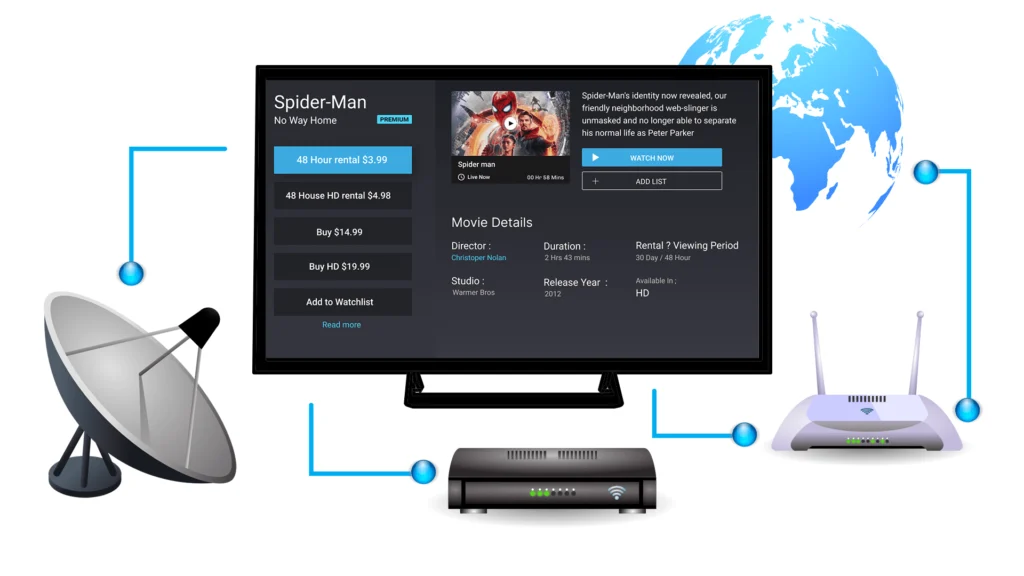
What Does IPTV Mean?
Internet Protocol Television (IPTV) — commonly referred to as “IPTV” — is simply: television content delivered over internet-protocol (IP) networks rather than through traditional methods like satellite, cable or terrestrial broadcast.
Unlike conventional TV broadcasting, which sends signals through satellites, cables or terrestrial antennas, IPTV uses your internet connection (broadband) to transmit video and audio data. what is iptv and how do i get it
In short: whenever you stream live TV, movies or series over the internet — especially via a dedicated IPTV service — you are using IPTV.
How Does IPTV Work: The Technical Side
Protocols, Encoding and Streaming Methods
At its core, IPTV works by encoding video content (live TV channels, movies, series) into digital data streams. These streams are compressed, then sent over the internet to users.
what is iptv and how do i get it
Depending on the type of content:
For live TV channels, IPTV often uses multicast (one-to-many) transmission — efficient when many users watch the same stream.
For video on demand (VOD) — movies, series, recorded shows — IPTV uses unicast (one-to-one) streaming, where each user gets their individual stream.
Streaming protocols commonly used: RTSP, HTTP Live Streaming (HLS), MPEG-DASH, or UDP/RTP — these help deliver smooth playback, allow for features like pause/rewind, and adapt to varying internet speeds.
Behind the scenes, IPTV platforms rely on middleware — a kind of software layer — that handles user authentication, subscription management, channel-listing (sometimes called EPG — electronic program guide), and content access control.
Devices That Support IPTV
One of IPTV’s strengths is versatility: you can access IPTV on many types of devices — provided they support IPTV clients or apps. Typical compatible devices include:
Smart TVs (modern TVs from Samsung, LG, etc.)
Set-top boxes / IPTV receivers (sometimes called “IPTV boxes” or “receivers”)
Computers and laptops
Smartphones and tablets (Android, iOS)
Streaming devices / media players that support IPTV apps
So whether you prefer watching on a big living-room TV screen or on your phone, IPTV can adapt.
IPTV Features & Benefits — Why People Use IPTV
Compared to old-fashioned cable or satellite TV, IPTV offers several advantages:
Flexible access & convenience: Watch on many devices — smart TV, phone, laptop — without being tied to a single TV set.
On-demand content and catch-up: Apart from live TV, many IPTV services provide on-demand libraries (movies, series) and “catch-up TV” — meaning you can re-watch shows you missed.
- what is iptv and how do i get it
Good quality and high resolution: Most IPTV services support HD, some even 4K, delivering good video and audio quality — often comparable or superior to traditional broadcast.
Simplicity — no satellite dish or cables: All you need is a stable internet connection and a compatible device; no need for satellite dishes, cables, or complex installations.
Wider content variety and flexibility: Depending on the provider and package, you may get global channels, movies, series, sports, etc. Also, depending on your subscription, you might access a large catalog of content.
Because of these benefits, IPTV appeals to many users who want flexible, modern streaming without the limitations of traditional TV.
IPTV vs Traditional TV and OTT — What’s the Difference?
It helps to compare IPTV with both traditional television (cable, satellite) and OTT streaming services (like streaming apps).
Versus traditional TV (cable/satellite): Traditional TV relies on broadcast infrastructure (satellite dishes, cables, antennas) and often offers fixed channel packages. IPTV uses the internet — so installation is simpler, and streaming is more flexible (any device, any time). IPTV also often supports on-demand and catch-up features, unlike many traditional TV plans. what is iptv and how do i get it
Versus OTT services (e.g. popular streaming apps): OTT (Over-the-Top) services deliver content over the public internet, but may not offer the same channel-based live-TV experience as IPTV. OTT focuses more on on-demand movies, series, etc., whereas IPTV aims to mimic the traditional TV + live channels experience — but over the internet.
In short: IPTV is sort of a hybrid — merging the live-TV experience of broadcast with the flexibility of internet streaming.
How to Get IPTV — Step-by-Step Guide
If you’re in a place like Morocco (or anywhere with internet access), here’s how you can set up IPTV and start watching — step by step.
Step 1: Choose the Right Internet Connection
Because IPTV streams TV over the internet, a stable and reasonably fast internet connection is important. For HD streaming, you’d typically want a broadband connection with sufficient speed and bandwidth.
If you have a slow or unstable connection, the stream might buffer, lag, or be poor quality. So ensure your home internet (WiFi or wired) is reliable before subscribing.
Step 2: Pick a Compatible Device or App
Decide what device you want to use: a smart TV, a set-top box, a PC, or a mobile device. Then you’ll need an IPTV client — that might be a native app on Smart TV, or a generic IPTV app on PC / smartphone.
If you don’t have a Smart TV, an IPTV set-top box (aka “IPTV receiver”) is often used — it connects to your internet, you input account info, and it gives you TV channels on your standard television.
Step 3: Subscribe to a Licensed IPTV Service
This is the most important step: you need to pick a legitimate, licensed IPTV provider — one that has the rights to stream the channels and content they offer.
Why this matters: IPTV as a technology is fully legal. But when a service streams copyrighted TV channels or movies without proper licensing, that becomes piracy — which can lead to legal issues, shutdowns, or poor reliability.
So before subscribing: check that the provider is transparent about licensing, offers legitimate apps, has payment and support mechanisms, and is not just some shady “deal.”
what is iptv and how do i get it
Step 4: Configure and Start Watching
Once you have internet, a compatible device, and a subscription:
Install the IPTV app (or set-top box)
Enter the subscription credentials (often a URL + username/password or playlist link) provided by the IPTV provider
Load the channel list / EPG (Electonic Program Guide) — this lets you see available channels and select what you want to watch
Enjoy live TV, VOD (on-demand movies/series), or catch-up — depending on the package
And just like that, you’re watching TV over the internet, without needing satellites or cables.
Legal and Security Considerations — What to Watch Out For
While IPTV by itself is just a technology — legality depends on how content is provided.
Legal IPTV services exist: When a provider obtains proper licenses for the content they stream, using IPTV is perfectly legitimate.
Risks of unauthorized IPTV / “grey-market” providers: Many cheap or suspicious IPTV services distribute content (movies, live sports, premium channels) without authorization. That’s illegal, and using them may have consequences (service shutdown, unstable service, even legal penalties depending on laws)
Security risks: Illicit IPTV services may pose cybersecurity risks — malware, poor data security, or unreliable service.
Unreliable content: Services lacking licensing may disappear at any time, or streams might be of low quality, with frequent buffering or interruptions.
Therefore — always choose a trusted, licensed IPTV provider, especially if you care about quality, stability, and legality.
Frequently Asked Questions (FAQ) About IPTV
Q: Is IPTV legal?
A: IPTV as a technology is legal. What matters is whether the service you subscribe to has the legal right to distribute the content. Licensed, authorized IPTV providers are legal; but if content is provided without permission, it’s piracy and illegal
Q: Do I need special hardware for IPTV?
A: Not necessarily. If you have a Smart TV, computer, smartphone or tablet — you can often use dedicated IPTV apps. Otherwise, you can use a set-top box / IPTV receiver connected to your TV. what is iptv and how do i get it
Q: What internet speed do I need for IPTV?
A: For stable HD streaming, a reasonably fast and stable broadband connection is recommended. The exact speed depends on resolution (HD, 4K) and number of devices streaming simultaneously. what is iptv and how do i get it
Q: How is IPTV different from streaming services like Netflix?
A: Streaming services (sometimes called OTT) typically offer on-demand movies/series via public internet networks, often without live TV channels. IPTV aims to replicate traditional TV — live broadcast channels + often on-demand — but delivered over the internet, sometimes via dedicated servers or networks.
Q: Can I watch on multiple devices?
A: Yes — one advantage of IPTV is flexibility. Depending on your subscription and provider, you may watch on a Smart TV, phone, tablet, laptop — sometimes simultaneously.
Conclusion — Is IPTV Right for You?
If you value flexibility, want live TV + on-demand content, and prefer not to deal with satellite dishes or expensive cable packages — then IPTV can be an excellent choice. what is iptv and how do i get it
It offers the best of both worlds: the classic TV experience (live channels) + modern streaming convenience (multiple devices, on-demand, catch-up).
But what really matters is choosing a legitimate and licensed IPTV service. Going for shady “too good to be true” deals may lead to poor quality, instability, legal issues, or security risks.
If you decide to try IPTV — make sure your internet is good, choose a reliable device, and sign up with a provider that’s transparent about licenses and content rights. what is iptv and how do i get it